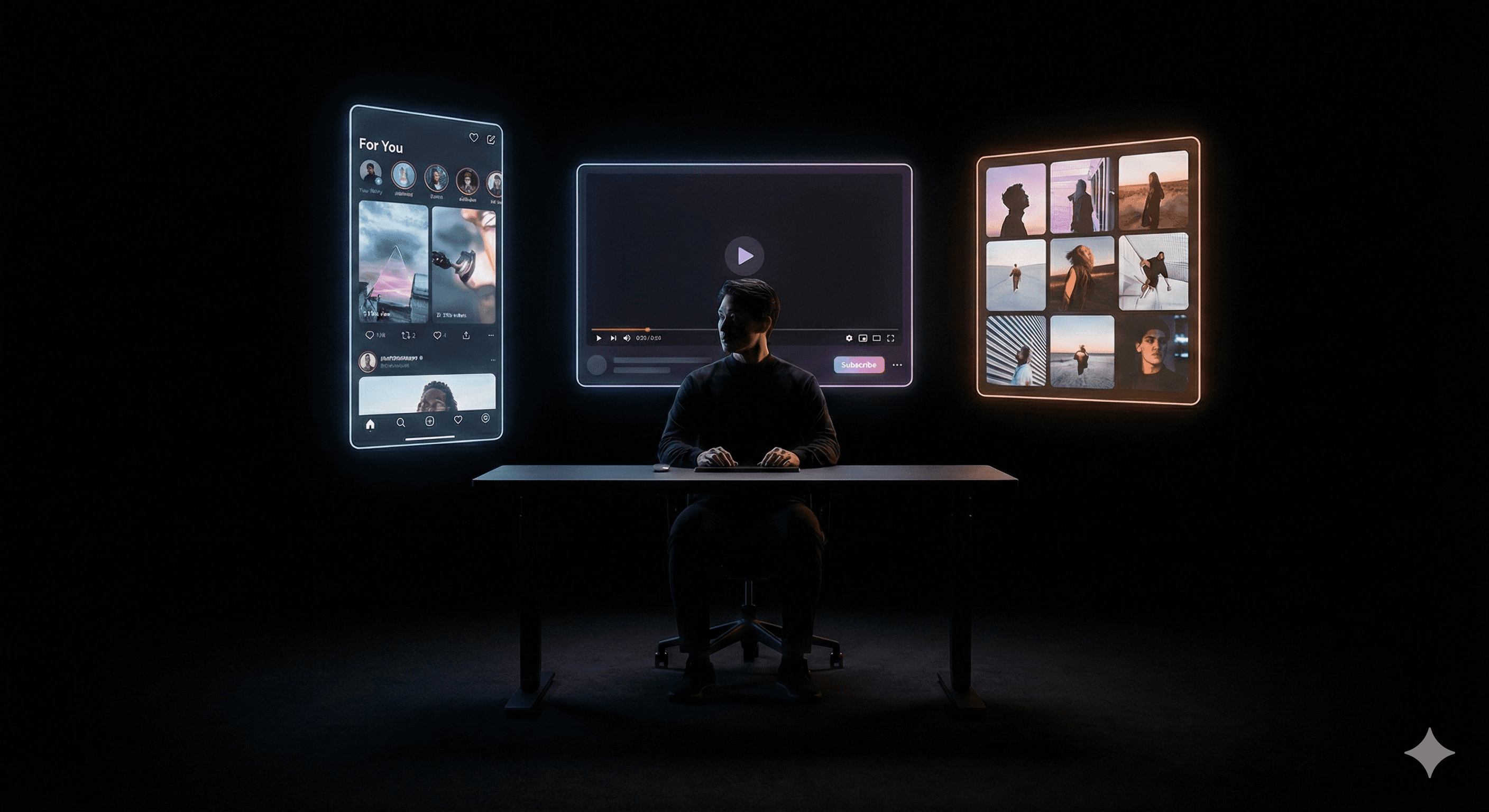
In 2026, the “TikTok-only” or “Insta-only” creator is a red flag.
12/02/26
In 2026, the “TikTok-only” or “Insta-only” creator is a red flag. Two thirds of creators plan to expand to new platforms this year, and full-time creators already operate across an average of 3.4 platforms.
For brands, that’s not chaos. It’s an asset – if you design for it.
A multi-platform creator strategy is not “post the same thing everywhere.” It’s treating each platform as a distinct channel inside one content ecosystem, with the creator acting as a cross-platform media brand rather than a single-feed influencer.
Why multi-platform is now the default
Three forces are pushing creators to diversify.
First, algorithm volatility. One change can cut reach by 50–60% in some niches. If a creator lives on one platform, that’s an existential risk. If they are spread across YouTube, TikTok, Instagram and email, it is a wobble, not a collapse.
Second, revenue diversification. Each platform pays in a different way – ad shares, live, memberships, storefronts, sponsorships. Multi-platform creators have more hooks in the water, so their income is more stable and less dependent on your one campaign.
Third, audience behaviour. The average social user actively uses six or seven platforms. Your customer already lives cross-platform. Multi-platform creators are simply mirroring that reality.
Recent data backs this up. Around 66% of creators say they plan to add new platforms this year. YouTube is the top expansion target, followed by Pinterest and Threads, which tells you something important: serious creators are moving towards search and evergreen, not just pure virality. Full-time creators already average around 3.4 platforms, with Instagram, TikTok and YouTube as the core stack.
Why brands should prefer multi-platform creators
Multi-platform creators give you advantages you cannot get from single-platform bets.
They reduce risk. If TikTok is hit by regulation, or Instagram throttles branded content, the campaign still has distribution via YouTube, Shorts, Reels, newsletters and communities.
They diversify audiences. YouTube skews towards search and long-form learning. TikTok is discovery and culture. Pinterest is planning and intent. LinkedIn is B2B and outcomes. One creator present across those surfaces can move the same message through very different contexts.
They amplify your message. Smart creators already run hub-and-spoke systems. A YouTube video seeds Shorts and Reels. A TikTok drives people into a newsletter. A LinkedIn post turns into a deeper case study. Your sponsorship should ride the whole system, not just a single post.
Platform diversification is now a signal of business maturity. Creators who treat their work like a company tend to be multi-platform by design. For brands, they are more resilient partners.
The content system: one idea, many surfaces
The backbone of a good multi-platform strategy is a hub-and-spoke content system. One core idea, adapted intelligently, instead of random content on every app.
A simple version:
Hub content lives on YouTube or in long-form. Eight to fifteen minute deep dives, optimised for search, built to earn the highest RPM and stay relevant for months or years.
Spokes live everywhere else. That hub video turns into short clips for TikTok, Reels and Shorts. Instagram posts and stories give behind-the-scenes context and reminders. A newsletter or LinkedIn post breaks out the key lesson or framework.
The result: one asset becomes five to eight platform-specific executions, each packaged for the way people use that platform. Short-form is punchy and hook-driven. Long-form is narrative and educational. Static content is searchable and saves well. B2B surfaces lean into frameworks, numbers and outcomes.
The brand’s job is not to dictate formats line by line. Your job is to brief the idea, the outcome and the non-negotiables, then let the creator map that into their own system.
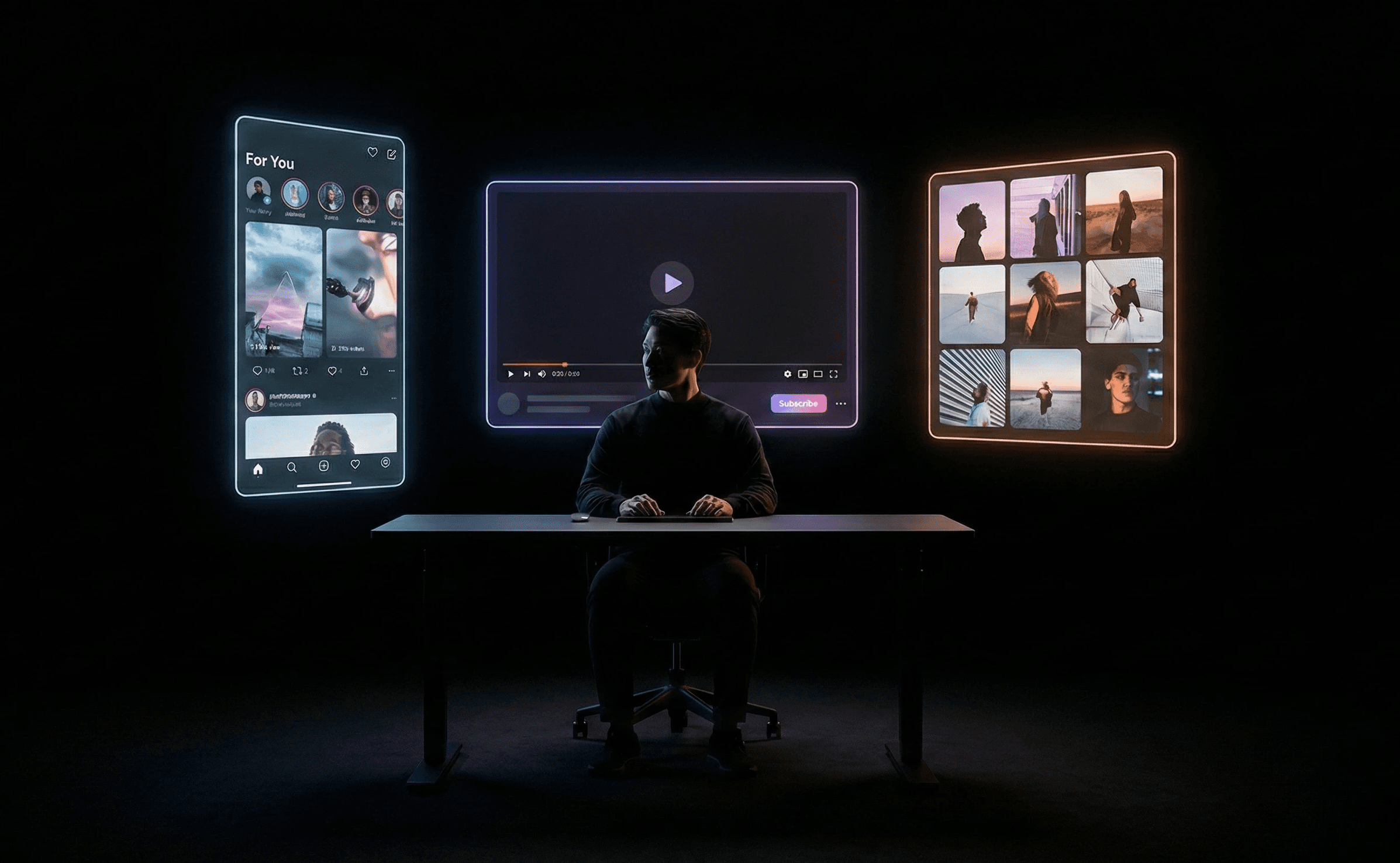
How to brief and measure in a multi-platform world
Most briefs are still written for a single algorithm. That is out of date.
To brief well, you define the big idea, the key messages and the must-have surfaces. For example: one long-form YouTube video, three to five short-form clips across TikTok, Reels and Shorts, and one LinkedIn or newsletter piece that lands the core argument. Within that frame, you give the creator room to adapt tone, pacing and format by platform.
Measurement needs to evolve with it.
You still track per-platform performance – views, engagement, clicks, saves – but you judge success at the campaign level across the creator’s full footprint. TikTok may be doing the awareness heavy lifting, while YouTube and email convert, and LinkedIn carries the case study that your B2B buyers actually share internally.
That means you need unified tracking and a single place where everything a creator does for you is visible, regardless of channel. If you only look at one platform’s numbers, you will misread the value of the relationship.
The strategic bottom line
By 2026, the creator economy has entered an era of consolidation. Leading creators operate like multi-platform media brands, with IP, products and investments layered on top.
Two thirds of creators are expanding platform presence. Full-time creators already average more than three platforms. Brands that are still buying “TikTok only” or “Insta only” strategies are fighting yesterday’s war.
A modern creator strategy does three things.
It prioritises multi-platform creators as higher-value, lower-risk partners.
It briefs and measures ecosystems, not isolated posts.
It uses operators – in-house or partners like Sobio – to architect and run those relationships across platforms without losing the plot.
Stop betting on one algorithm. Start designing around the creator’s whole universe. That is how you get the resilience and upside the 2026 creator economy is actually built on.