
A Portfolio Strategy for 2026
16/12/25
The question inside more sophisticated marketing and finance meetings is no longer, “Which influencers should we work with?”
It’s:
“How do we allocate capital efficiently across the creator landscape?”
Most brands still treat creator budgets like a shopping list. Smart brands are starting to treat them like an investment portfolio – thinking in yield, diversification and asset accumulation.
This article builds on earlier BRIEF pieces about what brands actually want and which creator archetypes win. Now we’re asking: how do you structure the money?
1. The investment thesis: what return are you chasing?
Before you allocate a single pound, you need a thesis. What is this budget supposed to do?
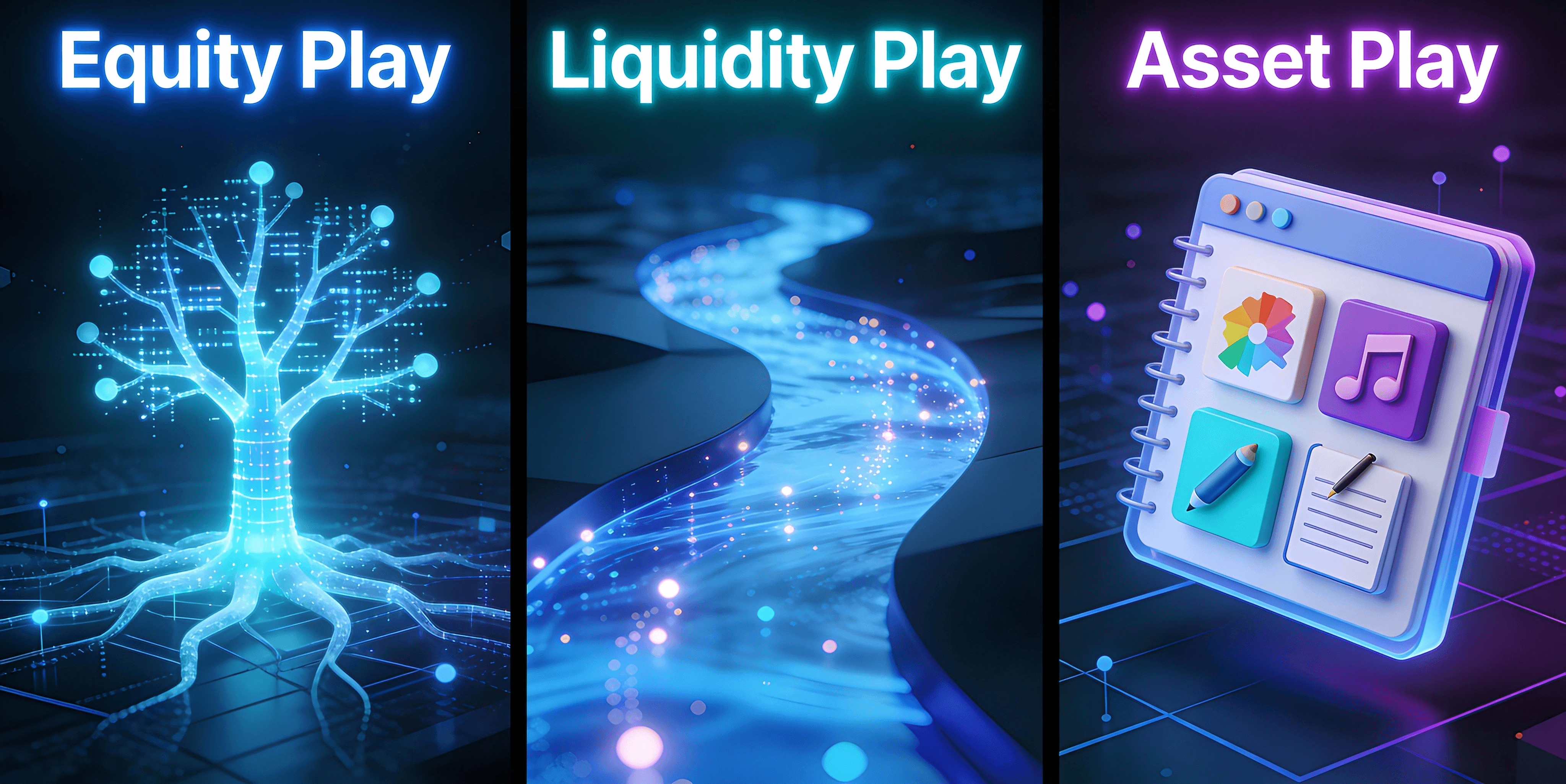
Most creator investment falls into three plays:
The Equity Play (Brand)
You’re buying future demand: mental availability, narrative ownership, category position.
The Liquidity Play (Demand)
You’re moving people from “interested” to “converted”: pipeline, sign-ups, trials, sales.
The Asset Play (Performance)
You’re building a library of creative IP that lowers CAC in paid, lifts conversion on site and improves CRM performance.
A serious 2026 creator portfolio is explicit about how much capital goes into each of these three.
2. Portfolio construction: the “asset classes” of creators
A balanced portfolio isn’t a random list of names. It’s a mix of roles.
Four creator “asset classes” cover most needs:
The Broadcasters (Awareness Hosts)
High reach, strong storytelling; they open the funnel and make the category make sense.
The Specialists (Niche Authorities)
High trust, deep expertise; they de-risk the purchase and answer the smart questions.
The Supply Chain (Production Studios)
High volume, high fidelity; they exist to feed your ad account, landing pages and CRM with performance-ready creative.
The Anchors (Community Leaders)
High retention and depth; they own newsletters, podcasts or private communities and can hold attention off-platform.
The question stops being “How many influencers do we have?” and becomes:
“Do we have the right blend of Broadcasters, Specialists, Studios and Anchors to execute our thesis?”
3. Capital allocation models by budget size
Your stage and budget determine how you weight those “asset classes”. As a starting point:
The Concentrated Portfolio (Emerging brands, ~£100k)
Roughly:
50% Core Holdings: 3–5 partners on light retainers, a mix of Broadcasters and Specialists.
30% Asset Supply: one Studio-style creator producing monthly assets for paid and CRM.
20% Venture Bets: one-offs and concept tests with new faces or formats.
You end up with 5–10 partners you can actually brief properly and learn from.
Example:
A DTC skincare brand with £100k might retain:
2 derm / skin experts (Specialists),
2 relatable Broadcasters on TikTok/IG,
1 Studio creator delivering a monthly performance-creative pack,
and keep ~£20k back to test emerging creators or new angles each quarter.
The Diversified Portfolio (Scaling brands, ~£250k–£500k)
Roughly:
60% Core Holdings: 8–15 creators on structured retainers – your “index” of proven partners.
25% Asset Supply: dedicated production pods and UGC creators focused purely on performance creative.
15% Venture Bets: new niches, new geos, new platform experiments.
You’re running with 12–25 partners, with clear tiers: an A-team you rely on and a test pool you rotate.
The Institutional Portfolio (Mature brands, £1m+)
Roughly:
65% Long-Term Yield: multi-season formats and longer agreements with top-tier partners.
20% Asset Supply: specialised studios for hero launches and ongoing creative pipelines.
15% Strategic R&D: co-created IP, new platforms, new archetypes.
At this stage you’re effectively running a mini creator network for the brand.
The exact percentages matter less than the principle: most of your capital sits in a defined portfolio you intend to compound, a smaller slice is reserved for optionality and upside.
4. How many creators do you actually need?
Rule of thumb:
Under £250k per year: 5–12 serious partners.
£250k–£1m: 10–25 partners.
£1m+: 20–40 partners, with clear tiering.
If you have 50+ “partners” on a spreadsheet but nobody your team can name as a recurring face, you don’t have a portfolio, you have exposure risk.
Inside those numbers, aim for:
A small core who show up consistently across the year.
A second tier who anchor specific topics, products or campaigns.
A rotating test group with clear endpoints: renew, scale or release.
5. Structuring the P&L: three tranches of spend
To make this work inside a real P&L, it helps to frame creator spend in three tranches rather than one blob.
Fixed OpEx (The Core)
The non-negotiable base: retainers for key creators, recurring formats, and production pipelines. This keeps the system running.
Variable CapEx (The Spikes)
Launch moments, seasonal pushes and big brand campaigns where you temporarily add more faces around your core.
R&D (The Lab)
A protected pot for experiments: new platforms, new archetypes, co-created IP. If you cut this to “save money”, the system stops evolving and you quietly increase future acquisition costs.
When finance asks what can be reduced, you can trim spikes without tearing out the core or starving the lab.
6. Valuation and pricing: beyond CPM
You can still translate everything back to effective CPM or CPA for comparison. But deals with creators should be built on three components:
Production Fee
The cost of the craft: strategy, planning, shooting, editing.
Distribution Fee
The value of audience access: reach, depth of relationship, fit with your thesis (equity, liquidity, asset).
IP and Rights Fee
The commercial value of using that content in paid, on-site, in CRM or out-of-home for a defined time and territory.
In practice, most serious 2026 deals look like:
A base fee for creation,
Distribution via the creator’s channels,
A clearly priced menu of usage windows and territories, with optional performance incentives or revenue share where it makes sense.
You’re moving away from the “CPM commodity” model and towards pricing the actual components you are buying.
7. Implementation roadmap
To move from “we spend on influencers” to “we allocate capital to creator assets”, the sequence is:
Audit
Review the last 12 months. Who delivered yield (brand, demand, asset performance)? Who was drag?Define your thesis
Decide your split between Equity, Liquidity and Asset plays for 2026.Construct the portfolio
Map existing and potential partners into Broadcasters, Specialists, Studios and Anchors. Decide who belongs in Core Holdings, who sits in Growth, who is Test.Lock in the core
Convert top performers into retainers or recurring agreements, even if small to start.Ring-fence the lab
Protect a percentage of the budget that must go to experiments, new talent and new concepts.Standardise reporting
Build a single view of creator performance across brand, demand and asset usage, so you can re-allocate capital quarterly with confidence.
The bottom line
For brands, the shift is from:
“We’re spending on influencers”
to
“We’re allocating capital across human distribution and creative IP.”
For creators, the goal is to move from being:
“A vendor on a campaign”
to
“A core holding in the brand’s portfolio.”
That’s where the smart money goes in 2026.