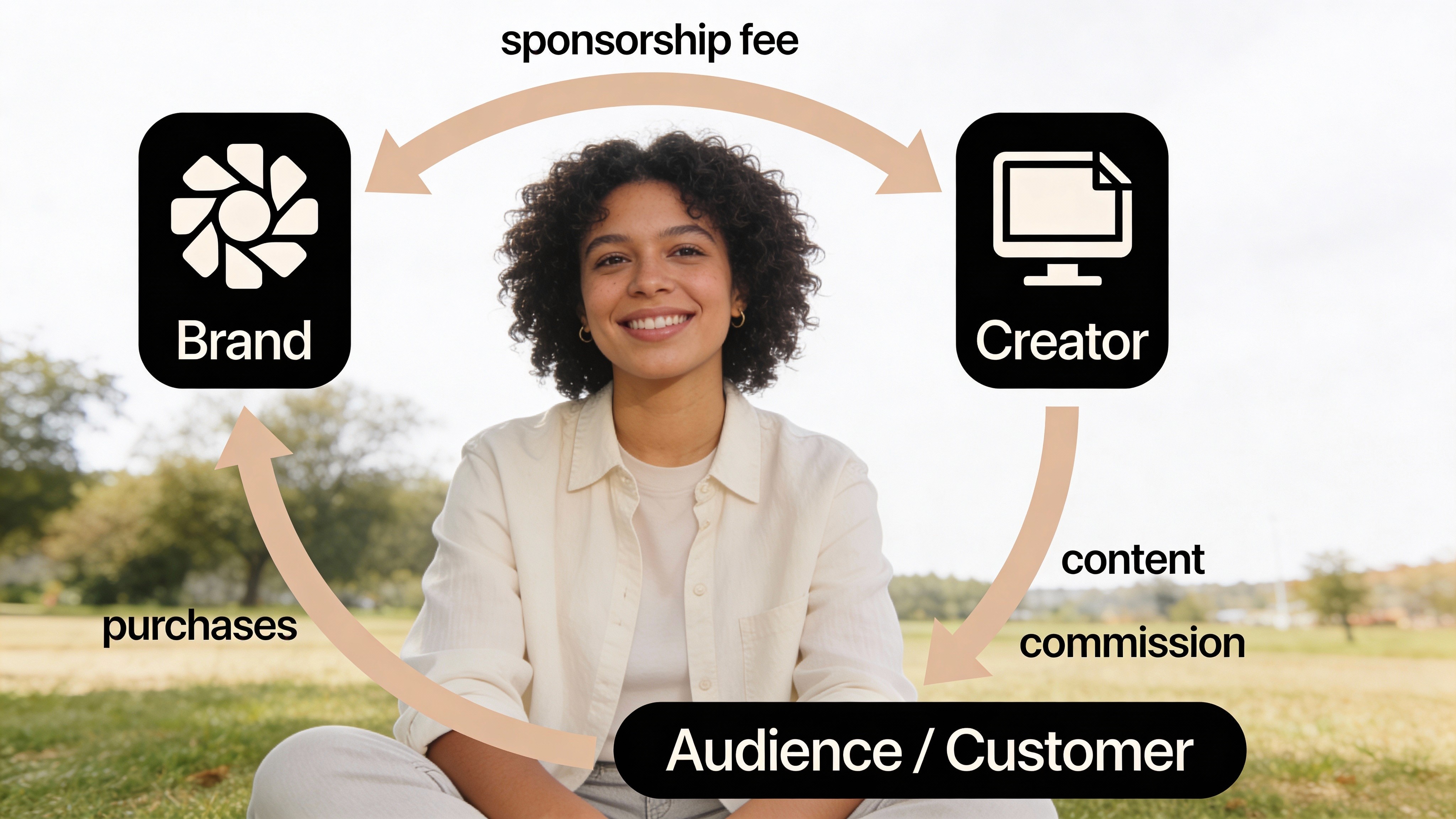
The next wave of creator economics is not about sponsored posts. It is about creator-owned commerce.
22/01/25
The next wave of creator economics is not about sponsored posts. It is about creator-owned commerce.
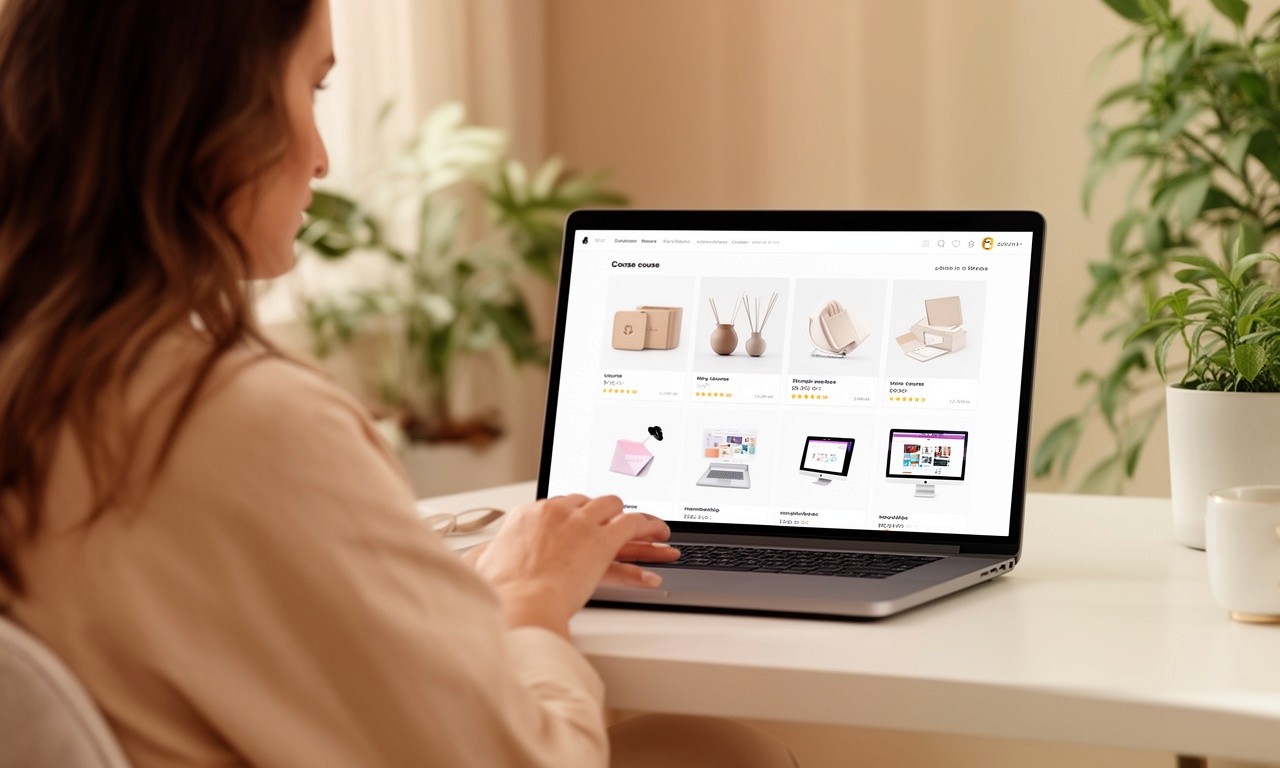
Creator storefronts – dedicated shopping experiences owned and run by creators – are becoming a core part of the income stack. Brands that position themselves as a supplier to these storefronts (instead of just a buyer of content) unlock a completely different set of economics.
The storefront model
Here is what a creator storefront looks like in practice.
A creator (let’s call her @Sarah, 200K followers) builds a dedicated shop on her own site. It can include:
Curated product recommendations with affiliate links that pay 15–30% commission
Co-branded products (for example, Sarah’s training programme co-created with a fitness brand)
Digital goods like courses, templates, Notion dashboards
Physical goods like merch and apparel
Sarah drives traffic to this storefront through her usual content: posts, stories, newsletters. When her audience buys, she earns commission or revenue share.
A single post that gets 50K views and 500 clicks to the storefront can easily produce $2K–$5K in commission, depending on product, conversion rate and average order value.
Why this matters for brands
The old model is one-way: brand pays, creator posts.
In the storefront model, it is reciprocal. The brand supplies products. The creator sells them. Both profit.
That changes the relationship:
Durability: If a creator makes real money from your product, they have a reason to keep recommending it. A sponsored post is one and done. A good affiliate product can live in their ecosystem for years.
Transparency: Performance is obvious. If 100 clicks drive zero sales, the creator earns zero. No fuzzy debate about “awareness”.
Scale: You can power 100 creator storefronts at once. Your media budget is multiplied by 100 sets of content and audiences.
Lower upfront cost: Instead of paying $5K to each creator, you pay only when sales actually happen.
The affiliate + sponsorship hybrid
The smartest brands do not pick between sponsorship and affiliate. They stack them.
Example structure:
Sponsorship: Pay the creator $2K to make a strong product review or demo.
Affiliate: Give them a unique link or code with 20% commission on every sale.
Incentive: If they drive more than $10K in sales in a month, they unlock a $1K bonus.
This gives the creator:
A guaranteed fee for the work
Upside if it performs
A reason to keep the content alive and keep driving traffic
It also gives the brand a cleaner yield profile: some fixed cost, some variable cost, and a clear view of payback.
Thinking of affiliate as a yield asset
Affiliate programmes sit in the middle of your creator portfolio:
Fixed income: Sponsorship fees ($2K–$5K) that you can budget for
Equity-like upside: Unlimited commission potential on sales
Recurring revenue: If the creator keeps mentioning the product, the sales keep coming
Compare that to:
Fixed sponsorship only: $5K, one post, then nothing
Traditional retainers: $5K a month for multiple posts, but limited direct upside
Affiliate-backed partnerships give you a better balance of risk and reward.
The storefront tech stack
To run a storefront, most creators will use:
A storefront platform: Shopify, ConvertKit Shop, or a custom Webflow build
Affiliate tracking: Impact, Refersion, or native tools
Analytics: to see which products, pages and creators convert
Payout automation: monthly commission payouts
A simple dashboard: so they can see traffic, clicks, conversion and earnings
Brands do not have to build all of this. But brands that show up with clean links, co-branded landing pages and easy tracking make it much simpler for creators to add them to the shop.
The economics for top creators
For a creator earning roughly $200K a year, affiliate and storefront revenue can easily be 20–30% of total income.
Take a simple example:
200K followers
50K clicks a month to the storefront
3% conversion rate (1,500 purchases)
$50 average order value
20% commission
That is $15K a month in affiliate revenue, or $180K a year. Often at higher profit margin than sponsorships because it is semi-passive once the content is live and the funnels are built.
Why brands should care
From the brand side, affiliate-backed creator partnerships are:
Performance-based: You pay on results, not promises.
Scalable: You can onboard dozens or hundreds of creators without dozens of bespoke deals.
Durable: Creators have recurring upside, so they keep your product in their content.
Verifiable: Attribution is clear and trackable.
The inflection point
By 2026, affiliate and commerce-enabled creator partnerships will likely represent 15–20% of all creator marketing spend, up from roughly 5% today.
Brands that build affiliate infrastructure now will become the “default” products in creators’ shops. Creators that build storefronts now will rely less on one-off brand cheques and more on compounding revenue.
The future of creator partnerships is not “I pay you, you post.”
It is “We both profit when your audience buys.”
Citations: Creator storefront adoption data (Shopify 2025, ConvertKit 2025); affiliate commission benchmarks (Impact, Refersion, 2025); creator income diversification (Creator Spotlight, 2025).