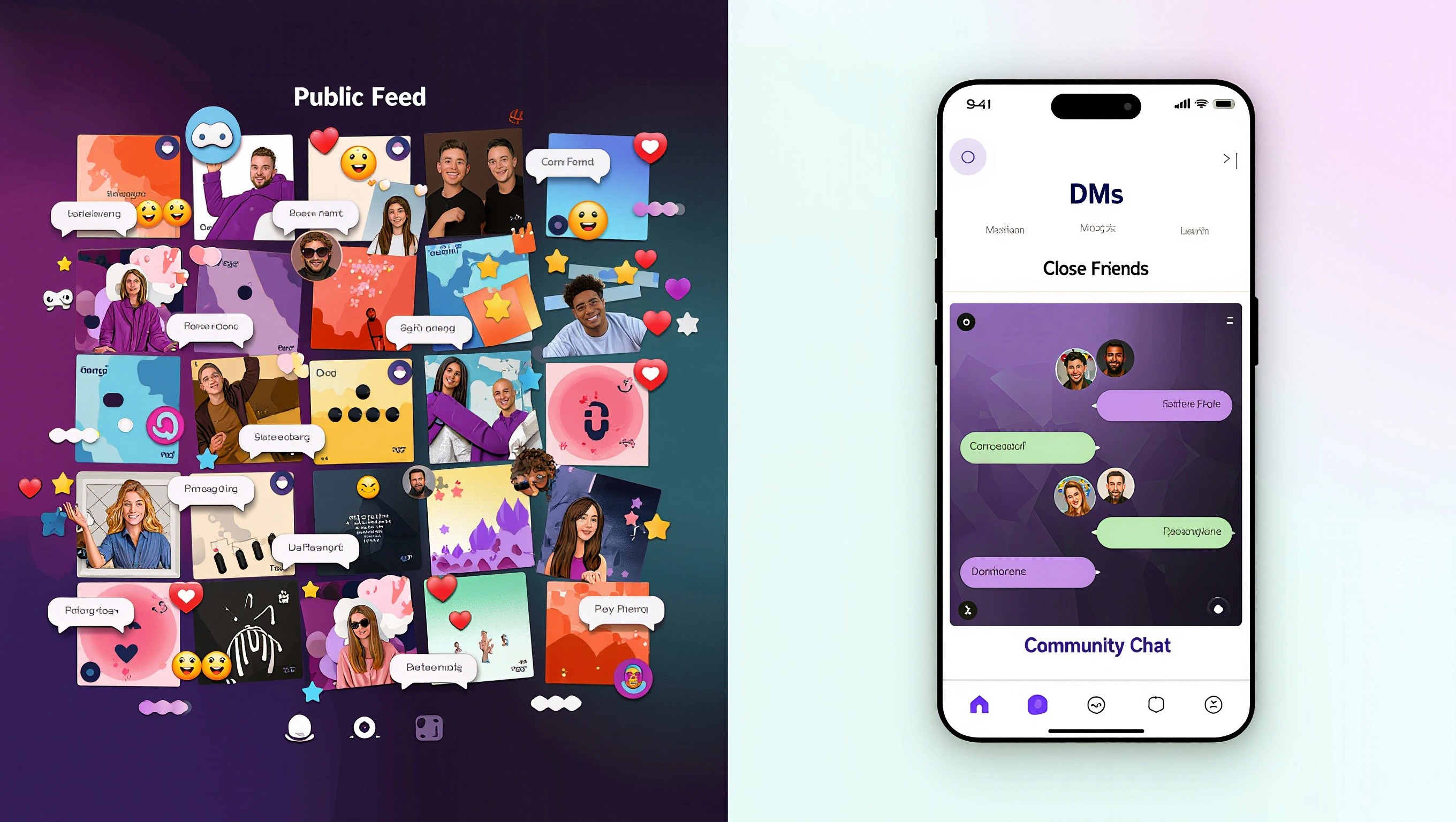
SCROLL ANY SOCIAL APP IN 2026 AND IT LOOKS LOUDER THAN EVER.
24/02/25
In 2026, the most valuable attention on social is not on the public feed. It is in DMs, Close Friends lists, group chats and private communities. People still scroll, but they increasingly decide what to buy and who to trust in smaller, controlled spaces.
That shift rewards brands and creators who work with fewer, better aligned partners and who design for private social, not just public reach.
HOW SOCIAL BEHAVIOUR HAS SHIFTED
Several patterns stand out.
Social remains a top discovery channel, but users say they prefer to interact with brands in smaller, private spaces such as DMs, groups and communities rather than public comments.
A growing share of meaningful engagement such as questions, referrals and complaints happens in one to one or one to few channels that Hootsuite describes as dark social.
Strategic commentary on the creator economy describes 2026 as being driven by culture, community, credibility and craft, not just reach.
Usage is also diverging by age and intent. Younger audiences live across TikTok, YouTube, Instagram and private chats, while older groups lean more on Facebook, YouTube and messaging apps. In all cases, high signal and high trust interactions are getting more local and more private.
FROM BIG ROSTERS TO TIGHT CREATOR PORTFOLIOS
On the creator side, the trend is away from massive rosters.
Brands are moving from broad influencer lists to smaller, curated portfolios of recurring creator partners.
2026 trend reports emphasise long term creator partnerships, co created programs and multi touch campaigns instead of one off posts.
Commentators describe an era of consolidation, with value concentrating around fewer serious creators, studios and collectives.
The practical pattern is:
Work with fewer creators more often.
Prioritise community and credibility over raw follower counts.
Integrate creators across multiple surfaces such as public feeds, email, communities, live, and events.
The key question shifts from “How many creators can we add?” to “Which ten to twenty creators are actually worth building with?”
PRIVATE SOCIAL AS THE HIGH INTENT LAYER
Public feeds are still useful for reach. However, high intent actions such as asking hard questions, forwarding recommendations and sharing real experiences are moving into private channels.
Research highlights DMs, Close Friends and group chats as places where real conversations about brands happen. Users bring up issues, ask peers for advice and share links away from the public timeline.
Consumers increasingly avoid public comment drama and prefer smaller rooms where they can ask basic questions and get honest answers.
Reddit path to purchase data shows people cross checking marketing and creator content in forums. Similar behaviour shows up in Discord servers, WhatsApp threads and private Instagram channels.
For creators, this looks like:
Close Friends or broadcast channels for deeper off feed context.
Discord, Slack or Circle communities where members talk to each other, not just to the creator.
DMs as pipeline for qualified questions, referrals and larger opportunities.
For brands, it means planning for the fact that many of the most important interactions will not be publicly visible.
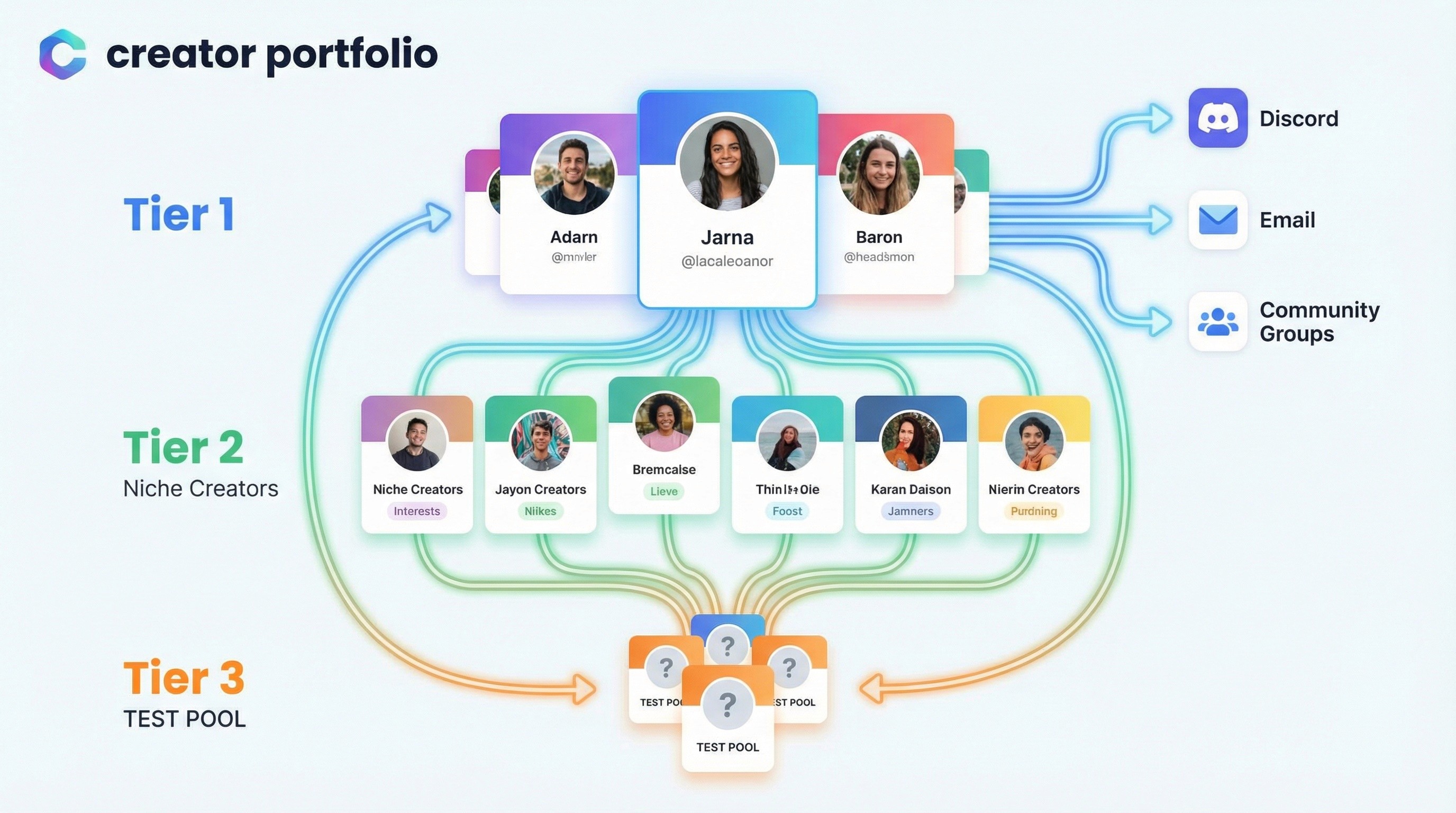
WHAT A 2026 INTIMACY FIRST PORTFOLIO LOOKS LIKE
A creator portfolio designed for this reality is smaller and deeper. As an example:
Tier 1 - two to five creators
Strong niche and clear positioning.
Active communities or high engagement private channels.
Embedded in launches, feedback loops and ongoing storytelling.
Tier 2 - ten to twenty creators
Niche experts with engaged audiences.
Used for education, user generated content and thematic campaigns.
Rebooked consistently, not treated as one offs.
Tier 3 - test pool
Smaller creators with promising tone and audience quality.
Run through low lift tests.
Graduated into Tier 2 or Tier 1 when they prove fit.
Budget and operational focus concentrate on Tier 1 and Tier 2, while Tier 3 feeds the pipeline.
OPERATING IN THE INTIMACY ECONOMY
This shift changes how you brief, measure and show up.
1. Brief for depth, not only views
Rather than aiming only for virality, brief for:
Content people save.
Content people send in DMs.
Where it fits, deeper cuts shared into private channels or communities.
Formats that tend to work include:
“Send this to someone who” reels and posts.
Carousels and threads with frameworks and checklists.
Honest “here is what actually happened” stories.
2. Measure relationships as well as reach
Classic metrics such as reach, clicks and return on ad spend still matter. In the intimacy economy you also track:
Creator renewal and retention rate.
Saves, shares and comment quality, not just like counts.
Number and impact of small room touchpoints such as AMAs, community sessions and Q&A.
Creator marketing reports for 2025 and 2026 consistently show that brands with the strongest return on investment are those investing in ongoing relationships and multi touch programs rather than one offs.
3. Respect smaller spaces
Private spaces are not simply new media inventory.
Good practice:
Treat smaller rooms as places to add value, not places to copy paste the main feed.
Allow creators to decline brand asks that do not fit the tone of their Close Friends or community.
Lead with access, learning and support before promotion.
If you treat intimate spaces like billboards, people will leave.
STRATEGIC BOTTOM LINE
In 2026:
Public feeds are louder than ever, but the decisions are happening in smaller, more trusted spaces.
Creator value is consolidating into fewer, more serious partners and communities.
Brands that design tight creator portfolios and private social strategies will be closer to where decisions actually happen.
The important question is not only “How many people saw this?”
It is “Who trusted it enough to save it, send it or talk about it in a smaller room?”